Writing
The 4am wake up people will tell you it’s important to journal. That writing down your thoughts, ideas and goals are all important in your personal and professional development. As much as it pains me to say it, they’re right, but they’re still wankers!
Humans write. From the moment we can say our ABC’s we are writing all sorts of things, stories, reports, emails, reviews, notes to friends, fact based projects…the list is endless but what we can’t do is allow Ai in particular take away or opportunity to write and express who we are.
There is a report floating around that some journalists at Fairfax have been told to use Ai more. It’s not clear if that means they should be just giving an Ai platform the basics and allowing it to write their copy or that they’re to use it for ideas etc…but in a business based on journalistic skill and the ability to write surely a major news out let isn’t going to allow Ai to write the news is it?
Ai is an amazing thing, here I went into ChatGPT and asked it to give me a 50 word summary of Trump in Iran; Donald Trump has taken a hardline approach toward Iran—using military strikes, economic pressure, and threats to stop its nuclear program and weaken its military. His strategy mixes aggressive force with sudden negotiations, leading to a fragile ceasefire and ongoing uncertainty about long-term stability in the region.
It’s pretty clear and concise but not much on the humanity of the whole situation and while news services want that shirt sharp easily produced content we can’t allow the human element of writing to be taken away. My 50 words? Trump has come in to his second presidency promising to end all wars but has instead started several. The invasion of Iran has destroyed global economies, increased the cost of living and been a key reason as to why petrol prices are through the roof!
I think anyone that read Hoodies content regularly would pick up if we were using Ai to write our stuff, which we won’t do, but it looks like some will. It is a sad state of affairs when journalists are being told they have to use Ai to produce their content and it make you wonder when the likes of Fairfax will just say we don’t actually need the journalists anymore. Then what? Who’s doing the news then?
Writing is a key part of who we are as humans and we must fight for our right to preserve our opportunity to express who we are, what’s important, what is right and wrong and who we are. If we let Ai take that over and become the voice of humanity we are indeed finished.
The Wagner Tenor
In my life I have stood next to several Wagner tenors and it is an experience that is akin to standing next to an amplifier at a concert. These are men usually the size of house and can produce sound that is so loud you wonder how they can do what they do, but oh my they do and they are the kings of the tenor voice!
Now yes I know the Spinto tenor gets all the good arias, gets the girl and has all the top notes but the Wagnerian tenor stands at the top of the pile because they have voices that are not only huge in size but they have this ability to keep going. what I mean by that is that Wagner for the tenor is relentless. It’s lyric tenor music on crack! It’s high, it’s set against massive orchestras and it goes on and on.
To give you an idea of the lyricism required for a Wagner tenors, the great Wagnerian tenor Wolfgang Windgassen used Mozarts Magic flute to bring back line to his voice. When I say line I mean he sang Taminos aria that has much less orchestration to it to work on the nuances of his singing, he listened more intently to his voice and leaned in and out where necessary. He used Tamino, the tenor in Magic Flute, as his base line for lyricism that he then took back to things like Tristan, Siegfried and Walther.
I remember standing need to the Finnish tenor Heiki Sukola, who was probably 6’7” and build like the proverbial, the sound he made was astonishing and he was a regular Wagner singer but it isn’t always about the size of the man, it can also be simply about how these kings of the tenor produce their sound. See while the size can be a contributing factor it’s also the cut the voice has that can send it over the massive orchestras these men sing with. The idea of big men singing big repertoire is that their bodies act as resonance for their voices but if you have someone like Peter Hofmann who wasn’t a big man you can still hear him because he has a cut on his voice. Big helps but it’s not the only way to become a true Wagnerian.
For a long time I was a Spinto fan and still am but nowadays I have come to realise that it’s not all about top notes and being the hero, it’s about who can stand there the longest and produce their mightiest sounds that can be heard over the loudest orchestras on the planet. The Wagnerian tenor is the king of the tenor.
Bayreuth
I have been lucky enough to see opera at the Met in New York, Covent Garden in London, the Bastille in Paris, La Scala in Milan, Staastoper in Vienna, La Fenice in Venice and the Sydney Opera House but even though I haven’t been there nor seen an opera in the theatre I think the best opera house in the world is the Bayreuth Festspeilhaus in Bayreuth Germany. Why? Because it is the only theatre of all the great opera houses built specifically for one composer, and that composer was Wagner.
Not only was Bayreuth built for Wagners operas the man built it himself! He oversaw every design concept and made sure it was built to his exact specifications. The orchestra stuck right up under the stage to give that real sense of music in the distance when required. A stage big enough to accommodate elaborate stagings and seats in an auditorium designed to carry sound the way he wanted. No other theatre in the world can lay credit to any of that and certainly no other composer.
Each year the Bayreuth festival comes to town with the best Wagnerian singers and the best conductors and it is sold out years in advance. Getting a ticket for Bayreuth is as hard as getting a ticket to the Super Bowl! But if you do get one then it is an experience like no other.
Opener in 1876 the theatre has seen the greatest Wagnerians tread its boards and still does today. Closed after the Second World War the festival was started again in 1951 and has not stopped since. Wagner was of course a composer but he wasn’t a masterful musician like Verdi or Mozart, rather he was a composer that understood every detail of the theatrical process and experience. He wanted to give life to his operas by writing the music and the librettos himself but took things a whole new level by building a theatre in which he could stage his own works.
In 1871 Verdi had the premier of his latest opera Aida staged in Egypt so he could include elephants and cater for the large chorus and extras required, but the opera didn’t have a purpose built theatre for it so today is often staged without many of the things Verdi had included at Cairo. This was of course unlike Wagner who by 1876 had his own theatre and could easily accommodate the destruction of the gods at the end of Gotterdammerung.
The rivalry of Verdi and Wagner is the stuff of legend and of better men than me to discuss but one story of the pair saw them standing only feet away from each other separated by I think a hedge. They could knew each other was there but both refused to turn to acknowledge the other and thus never met, a coming together of the two greatest opera composers in the history of western music was never to be.
Bayreuth stands as a homage to the great composer and to the determination of one man to produce operas in the way he wanted and I shall get there one day!
Why music matters at school
With so much of life being dictated by technology and Ai being thought of as the way of the future music in schools is now more important than ever.
When I was at school I couldn’t stand music theory and dreaded it. I wish now I’d lie attention because it is the rudiments of sight reading and being a better musician but what I did like about music was being able to play instruments and sing. Singing obviously became a major passion of mine and still is but the creation of sound by actual people in this case kids is perhaps one of the last remaining opportunities kids have to be themselves.
No one likes hearing the creaking of an out of tune violin, or the muffled sounds of a trumpet being tortured, or drums being played out of time, but while we have all endured kids concerts that do all of the above right now more than ever we have to say we love it! Right now our kids are playing violins, trumpets and drums amongst other things as one their last chances to create something of their own. They’re creating sounds they made, they learned how to make, they’re creating feelings and they’re creating something that they’re proud of.
Yes kids still get to kick a ball and run at sporting lessons but creating sound and music is something that’s not only important for their overall education but it’s vital in their development for the future of creativity. If we believe that Ai will take over our lives then we need to start defending the things that give us soul, that seperate us from technology, that give us feelings and that give us the chance to be human.
Music makes us feel things that we don’t get from other sources. How do you feel when you hear a certain piece of music? What memories does it conjure up? What does it mean to you? That music no matter what it is was created by a person that knew how important it was to make and create something that could conjure up feelings and our kids need to now understand the same ideas more than ever.
Music is not everyone’s thing but right now no matter what our kids love or loathe music must be at the core of their education because the soul of humanity depends on it.
The Solti Ring
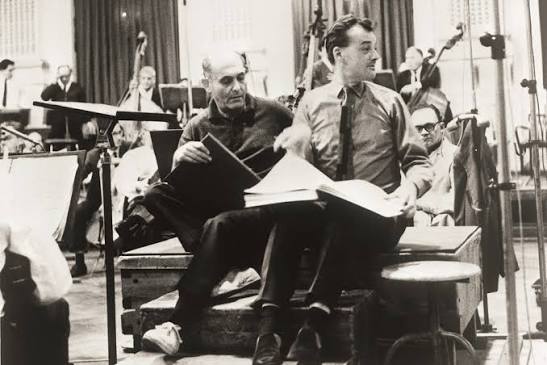
In 1958 the greatest opera recording of all time began. It was Wagner’s Ring Cycle, to be conducted by legendary conductor Georg Solti with the orchestra of the Vienna Philharmonic and to include the greatest Wagnerian Singers ever assembled for such a recording. In the control booth was legendary producer John Culshaw and the whole thing recorded in Vienna’s Sofiensaal.
It took seven years to record the quartet of operas that if played or performed back to back makes up more than seventeen hours of music. Music that stirs the soul and takes the listener on a journey into the mystical world of the Rhinemaidens and Wagner himself.
Never before has such a cast of singers been brought together, Nielsen, Hotter, Wingassen, Frick, Sutherland, Fischer-Dieskau, King all brought to the Sofiensaal over the course of Eight years to record the epic masterpiece.
It was a recording that included the use of stereo for the first time and set the benchmark for all future recordings, it is still the benchmark today! The use of 18 anvils in the orchestra, the purpose made steer horns, the double tracking used by the Decca engineers and the time to produce a recording that was ahead of its time is staggering. Despite the obvious advancements in musical recording since the first of the ring cycle operas was done the Culshaw/Solti ring remains the best. Karajan, Bohm and countless others have also made recordings of the astonishing cycle but none have surpassed the standard of the Solti ring.
There is a 90 minute documentary on You Tube about the recording of the Solti ring and when you think about how long ago it was made and how it sounds it is testament to the vision and skill of everyone involved in making it a reality.
I always find it funny to think that as Brigit Nielsen and Georg Solti were busy recording one of the greatest opera cycles in the history of western music in 1965 and the Beatles were playing across the world. Obviously the Beatles never made it to Vienna’s Sofiensaal to hear or be part of the recording but in a golden era of opera four lads from Liverpool were also redefining music and recording with another English in the booth, George Martin. Both Culshaw and Martin were perhaps unaware that they were designed studio crafted art. Art via Wagner and art via Lennon and McCartney.
If you get the chance watch the You Tube documentary it is staggering how long ago it was made and what the results are to this day. It was an era we will never see again but we are so lucky to have it with us now and into the future.
Jean Michel Basquiat at Sotheby’s
Get ready, art lovers, because Sotheby’s is about to shake the walls with the upcoming Jean-Michel Basquiat sale. Basquiat, the late Brooklyn-born wunderkind who fused street grit with high-art bravado, is back in the spotlight, reminding us why his canvas scribbles feel more alive than most museum walls ever will. His scrawled crowns, jagged figures, and cryptic words? Still as provocative, still as urgent, still devastatingly real and brutal.
The sale isn’t just about numbers—though, let’s be real, the numbers are stratospheric. Collectors are expected to throw down tens of millions for these pieces. But there’s a thrill here that money can’t fully capture: owning a fragment of that lightning-strike genius, a piece that screams 1980s downtown New York while somehow feeling timeless. Sotheby’s has curated a selection that spans the feverish energy of his early work through to the more meditative later canvases, showing the evolution of a painter who was never content to sit still.
And here’s the kicker—Basquiat’s market isn’t just hot; it’s volcanic. Every new sale reinforces his status not only as a cultural icon but as an artist whose work refuses to be commodified quietly. It’s a spectacle, a bidding war, a reminder that the street and the gallery can collide explosively.
So strap in. Whether you’re a collector, a casual fan, or just someone who likes to say, “I saw it before it blew up,” this Sotheby’s sale is shaping up to be another legendary chapter in the Basquiat story. It must be said that it’s highly likely Samo as he was known via the street art scene would shake his head at the money his paintings sell at. The issue I have with a painting like this selling for as much as it does, JMB wanted it for the people and not some soulless asshole who’ll buy it and stick it away in a private collection. I think JMB would be embarrassed, but no matter his attitude we are sadly missing the man who brought street art and honesty to Sotheby’s.
Puccini and Wagner
Puccini was for me the last populist opera composer and while Verdi was a genius Wagner is the king of opera. Now I know there are those that will disagree given Verdi wrote operas comparable with Shakespeare but it was Wagner that gave us the complete operatic experience.
Puccini was of course influenced by Verdi but at the core of what Puccini wrote was Wagner. The music from Manon Lescaut in particular isn’t Verdi rather it’s Wagner as are the through composition style. The mighty tenor aria Nessun Dorma has the top note but it doesn’t end on a big chord progression rather it resolves the melody but quickly moves on with no break between scenes. This is exactly how Wagner wrote his main arias, magnificent melodies with highs and lows but through composed. Theo aria Wintersturmme from Walkure is case in point. A rolling melody that has the tenor singing at the height of their powers but no self indulgent ending.
Wagner was all about the entire operatic experience. The man went so far as to design his own instruments to get the sound he wanted. The Wagner tuba can be seen in use in the documentary of the Solti Ring. A recording that still astonishes in its complexity and quality is testament to the fact that Wagner was the opera master.
Wagner didn’t just create instruments, push singers to their limits and write through compositions he also built a theatre! Bayreuth is the home of Wagner, a purpose built arena dedicated to all things Wagner! An orchestra pit to hold the massive bands he demanded, a theatre that naturally amplifies the singers and space that can cope with the extraordinary demands of staging a Wagner performance.
Puccini was the populist influenced by Wagner, Verdi was the genius but Wagner was and still is the King of opera.
Who was the best?
So who was the best? Pavarotti or Domingo? What a question! I ask it because I saw the same question come up on a social media post yesterday. The video had the final scene of Pagliacci where Canio kills Nedda and Tonio delivering his famous line, La commedia e finita…Pavarotti is all his vocal brilliance realises what a mistake he’s made and instantly shows regret, while Domingo is the violent lunatic that is regretful but sorry?
Pavarotti was a tenor that crossed the lines of the fach system. He said Mozart in concerts and Otello at others, whereas Domingo was at the other end of the scale, he was a dramatic tenor that sang Heldentenor repertoire.
Pavarotti had the perfect career. He started off as lyric tenor and slowly moved through the lyric repertoire to heavier Puccini and Verdi singing the Moor only three times in concert. Despite singing Nessun Dorma the great man only sang Calaf live a few times but recorded it with Mehta and Sutherland. Domingo was also a lyric tenor but moved into dramatic repertoire almost straight away. His voice had a darker edge with a cut of steel and his acting was beyond compare. When Olivier saw his Otello he said, not only can he sing it the bastard can act it as well.
The two men were life long friends and had an undying respect for one another. Their duets from Boheme at the Met was the stuff of legend as were their concerts with Carreras but who was the best? From a natural talent it was Pavarotti from a technical complete tenor package it was Domingo but it’s actually not about who was better, it’s about the fact that we got to experience arguably the two greatest tenors in history in our lifetime.
The Tenor
I would’ve liked to be a Verdi baritone but I was a tenor and despite wanting to sing Iago in particular I’m very glad I was a tenor. See tenors get all the best male roles, ok they don’t get to be villains very often but they get the best tunes. Plus if you sucked at musicianship like I did you had an easier time because your line in an ensemble was invariably the tune so it was easy to sing. But no matter what kind of musician you are being a tenor gives you access to some of the greatest music ever written.
The tenor though can’t sing everything. Now in the traditional list of types of tenor one is missing, the pop tenor. These are the singers who can sort of sing high notes but bash out Nessun Dorma at an event no matter how badly. The famed Italian tenor Andrea Bocelli is a pop tenor and I’m sorry I’ve never understood the phenomenon around him. I met him once in London and he was very nice but as an operatic tenor he’s not in the same league. For me his best album was Romanza, an album in which he sang Italian songs and it was great, the later opera recordings especially of Otello were dreadful!
Regardless of the crappy pop tenor giving the world the wrong idea of tenors there are arguably four types of tenor; the lyric, the spinto, the dramatic and the heldentenor. In Germany, one of the great homes of opera there is a thing called the Fach list. A list of all vocal types that has operatic roles each voice type needs to be able to sing. For a lyric tenor it’s lots of Mozart, Bellini and Donizetti. The lyric tenor has an easy top and is a light sounding voice with good cut. The spinto is a tenor that’s got some weight to their voice, they’re singing Verdi and Puccini and has a ringing top B flat that can cut through a big orchestra. The dramatic tenor is also singing Puccini and Verdi but the bigger roles of Fanciualla, Turandot, Trovatore, Samson etc…the Heldentenor is the Daddy of tenors. They’re usually big dudes with barrel chests and voices that are so loud you wonder how a human can make that much noise. Their speciality is Wagner and they sing it in big houses with big orchestras. The funny thing about Heldentenors is that they will often sing roles from the lyric repertoire, like Tamino in Magic flute to maintain the lyricism in their voices.
Tenors are also the ones who get the girl both in performance and real life, so if you’re an aspiring singer, be a tenor! Best tunes, best roles and always gets the girl in the end!
Shakespeare
In an age obsessed with speed, convenience, and the relentless churn of technology, Shakespeare remains not just relevant, but essential. His work cuts through the noise of notifications and algorithms by addressing something far more enduring than any app update: the human condition. While modern life encourages quick fixes and surface-level engagement, Shakespeare forces us to slow down and confront complexity—of emotion, morality, and identity.
His characters are not relics of the past; they are mirrors of ourselves. Ambition, jealousy, love, betrayal—these are not outdated ideas, but daily realities, now playing out on digital stages as much as physical ones. The difference is that Shakespeare gives these impulses depth and consequence. In a world of tweets and headlines, he offers nuance.
Moreover, his language, though centuries old, sharpens the mind. Engaging with Shakespeare is like resistance training for thought: it demands focus, interpretation, and patience. These are precisely the skills at risk of erosion in a culture dominated by instant gratification.
Technology may shape how we live, but Shakespeare reminds us why we live. He anchors us in shared humanity at a time when screens often divide more than they connect. His works endure not because they are old, but because they are timeless—an antidote to the fleeting nature of the modern world, and a quiet rebellion against the idea that everything must be fast to matter.
Giuseppe Verdi
Giuseppe Verdi stands as the most important and influential opera composer in the history of Western music not simply because of his enduring popularity but because he reshaped what opera could be. Writing in nineteenth-century Italy, Verdi transformed opera from a decorative aristocratic entertainment into a powerful vehicle for human drama and political expression. His works such as Rigoletto, La Traviata, and Aida brought real emotional depth to characters who felt recognisably human, rather than mythic archetypes.
Verdi also revolutionised musical storytelling. He tightened the structure of opera, ensuring that music and drama served each other seamlessly. His melodies were direct and unforgettable, yet always rooted in the emotional truth of the scene. In later masterpieces like Otello and Falstaff, he achieved a level of dramatic integration that influenced generations of composers, from Giacomo Puccini to Richard Wagner.
Crucially, Verdi became a cultural and political symbol during the Italian Risorgimento, with his music echoing the aspirations of a unified Italy. His name itself became a rallying cry.
Ultimately, Verdi endures because he fused musical brilliance with profound humanity. He did not just write operas; he redefined the art form, setting the standard by which all others are judged. Even today, his operas dominate stages worldwide, proving that his understanding of voice drama and audience connection remains unmatched in the operatic canon and beyond comparison.
JS Bach
The Bach Cello suites are, for me, the most beautiful and breathtaking pieces of music ever written for a solo cello. Yes I know there are people who will disagree but here’s something else controversial, the Pierre Fournier recording of them is the best bar none. The only other recording that comes close is Yo Yo Ma’s first recording of them. Controversial yes but for me the Fournier tempos are perfect, the music has time to breathe, Fournier gives them light and shade and shape.
There are five recordings in my life I have listened to from start to finish when I first bought them and they are very different…
- Chinese Democracy – Guns n Roses
- Freedom of Choice – Devo
- Viva La vida – Coldplay
- Turandot (Puccini) – Mehta, Pavarotti, Sutherland
- The Bach Cello suites – Pierre Fournier
There are of course many other favourite pieces of music from Wagner, Beethoven, Yes, Cold Chisel but the Bach Cello suites are pieces of music that to me can be interpreted in so many ways. They give the listener the opportunity to craft their own story, you sit and listen and take your own journey to where they take you. Are they sad? Are they joyful, melancholic? They are to each of us different and that’s why they are so special. But no matter how they are interpreted they are and will always be a musical window into the soul of one the greatest composers in the history of western music. Bach gave us so many great works but the cello suites for me are some of his best and they’ll be with me forever.
Otello
Otello is the operatic version of the Shakespeare play Othello. The opera was written by Italian composer Giuseppe Verdi and it remains one of the greatest operas ever written. The opera perfectly captures the work of Shakespeare and although the moor himself is not played in black make up by anyone that sings the role the opera reduces the play to a succinct version that is in some respects more powerful than Shakespeare’s original work.
The play Othello offers a nuanced approach to the characters, Othello’s slow decline in jealousy, Iago’s development into pure evil and Desdemona’s innocence totally betrayed, but in the opera things move a much more dramatic and faster rate. Othello’s suspicions are raised early with Iago singing what could be described as a pact with the devil that aims to destroy the Moor. Iago convinces the once mighty Moor that he is the only one Otello can trust much to the joy of Iago.
The music of Otello is some of the best Verdi ever wrote. The Oath duet at the end of act two is easily as good as the tenor baritone duets from Il trovatore, Don Carlos and La Forza and really probably the best of all of them.
The often made comparison between Verdi and Wagner are most in show with Otello than anything else Verdi wrote. Wagner was an exponent of the composing style called; Through composing, meaning one aria, chorus, duet etc flowed into the next, there was no big note and the end, rather the drama and the music keeps moving. There are very few perfect cadences where the audience has a chance to recognise resolution. Verdi was no big fan of Wagner and vice versa, the two men once stood metres apart from each other in a park but faced away from one another and refused to meet and never did.
Despite Verdi being no real fan of Wagner Otello is very much through composed. Apart from Iago’s credo and Desdemona’s aria there are no real big aria moments, yes Otello has Dio mi potevi but it’s not Nessun Dorma and even that offers no real chance for a pause. Many say that Falstaff, Verdis last opera was his best but for me it’s Otello. No it’s not the play but with the libretto brilliantly written by Boito and with Verdis music for me it is better than the play.
It all ends badly of course with both Otello and Desdemona dying but such is the drama and the soul in opera and Shakespeare. Otello remains one of the great grand operas in the history of western music and long may it stay there Ai or not.
The Spinto Tenor
A Spinto tenor sits in that rare, electric space between lyric beauty and dramatic power—the voice that can whisper and then, without warning, cut straight through a full orchestra. The word “spinto” literally means “pushed” in Italian, and that’s exactly what defines it: a lyric tenor sound with an extra surge, a gear change that brings weight, urgency, and emotional punch.
It’s not just about volume. Plenty of singers are loud. A true Spinto has control—silvery tone, warmth in the middle, and then that unmistakable push when the music demands it. It’s the sound that makes you lean forward in your seat. In opera, that matters. These are the voices that carry passion, conflict, and heartbreak without losing elegance.
Think of Luciano Pavarotti in his prime—often labelled lyric, but with a Spinto edge when it counted. Or Plácido Domingo, whose voice rode that line between lyricism and full dramatic force. Then there’s Franco Corelli—arguably the ultimate Spinto, all fire and steel, a voice that felt almost dangerous in its intensity.
More modern names like Jonas Kaufmann carry that same DNA, blending darkness and power with precision. These singers don’t just perform—they drive the music forward, pushing it to the edge without breaking it.
That’s why Spinto tenors are so revered. They bring balance: beauty and strength, control and risk. In a world where voices often sit safely in one category, the Spinto refuses to stay still—and that’s exactly what makes it unforgettable.
Banksy revealed? Again?
The mystery of Banksy has become almost as famous as the work itself. For decades, the elusive figure behind some of the world’s most recognisable street art has remained hidden, turning anonymity into part of the brand. But every few years, the question resurfaces: who is he really?
Reports and investigations—picked up and circulated by outlets like Reuters—have pointed toward a man named Robin Gunningham, a Bristol-born artist with ties to the underground scene where Banksy first emerged. The theory isn’t new, but it’s been reinforced over time through geographic analysis, early interviews, and patterns in the artwork’s appearance. For many observers, the evidence feels compelling, even if it stops just short of confirmation.
And that’s the key tension. Banksy’s identity is both an open secret and a locked door. Enough clues exist to build a strong case, but never quite enough to definitively close it. Whether that’s by design or discipline, it has allowed the artist to maintain a rare kind of cultural power—one where the message always comes before the messenger.
There’s also a broader question at play. Does revealing Banksy actually matter? Part of the appeal lies in the anonymity, in the idea that the work could belong to anyone and everyone at once. Strip that away, and you risk turning a movement into a man.
For now, despite the reporting and speculation, the myth holds. And perhaps that’s exactly how Banksy—whoever he is—wants it.
The Singer
I dusted off my aria books the other day and decide to have a sing something I’ve not done for a while. I have so many ideas of what I could do at a creative level to sing more but I run of time before the family get home and my planning of global opera domination stops to return another time for my delusions of grandeur.
Aside from my own somewhat fictitious plans for a global singing career it did get me thinking what advice I’d give my younger self when it came to singing. I was a poor student both at school and University, didn’t listen, didn’t care, thought I was destined to be a megastar. Didn’t really practice, didn’t know my music, got pisses and laid a lot and really fucked it all up. So what I’m trying to say to a young singer is don’t fuck it all up.
Now we know as parents telling any kid how to do something either gets an eye roll or a reaction of I’ll do exactly the opposite, such was my reaction. But could I go back to the early 90’s I’d say to myself, keep up the languages, pay attention in music theory and be more committed than everyone else! Be dedicated, listen, go and hear other singers, travel, love, drink, live a life and be ready…
Music and more specifically opera is hard career to have. You have a highly competitive industry and there are no friends when it comes to castings. Don’t try and make sense of it all either, it does not make sense so just be you, but be the you you can live with 35 years from now. Be the person who gave everything and never ever gave up.
Languages
The ability to sight read
An understanding of the Fach system
Being prepared
Never giving up
Resilience
Confidence but not arrogance…and
Talent
Being an opera singer takes years of dedication and hard work but it can be done and believe me that while you won’t make a fortune it is one of the most fulfilling occupations on the planet…even if Chalamet thinks it’s a dead art.
Oscars ‘26
Every year the film industry gathers for the glitzy ritual known as the Academy Awards—better known as the Oscars. Once upon a time, it genuinely felt like a cultural moment. Families watched together, the winners became household names, and the movies crowned that night were often the same ones people had actually seen at the cinema.
These days, it feels more like a private party the rest of the world forgot to attend.
Ratings for the Oscars have been sliding for years, and it’s not hard to see why. Many of the films nominated are tiny art-house productions that ordinary audiences haven’t heard of, let alone paid to see. Meanwhile the movies that people actually line up for—big crowd-pleasers, comedies, blockbusters—often barely get a look in. The ceremony ends up celebrating a version of Hollywood that feels disconnected from the culture it claims to represent.
Then there are the speeches.
Instead of a night about filmmaking, the Oscars increasingly turn into a political soapbox. Actors who spend their lives reading lines written by someone else suddenly present themselves as moral philosophers delivering lectures to millions of people watching at home. Whether it’s climate policy, elections, foreign wars, or social issues, there’s always another celebrity ready to explain how the world should be run.
But here’s the thing: most people didn’t tune in for a sermon.
They tuned in—if they tuned in at all—to see movies celebrated.
Maybe that’s the real reason the Oscars feel less relevant today. When an awards show stops being about films and becomes about celebrities broadcasting their opinions, audiences eventually decide they have better things to do.
The Oscars are this coming Monday and we will find out not only the winners but if they have any kind of cultural relevance in 2026. Personally I doubt we will ever be writing about the Oscars in our Culture section ever again.
Opera as Art
In 2026 the world moves at a relentless speed. News cycles spin by the hour, attention spans shrink by the minute, and culture is often reduced to whatever happens to be trending on a screen. That is exactly why opera still matters.
Opera forces us to slow down and listen—to music, to language, to the depth of human emotion. Works by composers like Giuseppe Verdi and Giacomo Puccini remind us that art can express love, rage, grief, and hope with an intensity few other forms can match.
In your life can you remember a time when it has been more important to understand how our souls feel? How it feels to be alive and how it feels to be part of something cultural and important!
Opera does exactly that. It gathers strangers in a theatre and invites them to feel something together. In a fragmented modern world, that shared emotional experience is rare.
Opera isn’t a relic from the past. It’s a reminder that culture still has the power to make us human. Opera is a great love of mine and will feature heavily in the pages of my newspapers in the coming weeks, months and years.
Be decent, be human and be cultured
In 2026 it can sometimes feel like society rewards the loudest voice rather than the wisest one. Social media amplifies outrage, public debate turns into shouting matches, and many people seem quicker to judge than to understand. In that kind of climate, something very basic has become surprisingly valuable again: simple human decency.
Decency is not complicated. It means listening before shouting, treating strangers with respect, and recognising that people with different views are still people. In a world where outrage travels faster than thought, basic kindness has become almost radical.
But decency alone isn’t enough. Culture matters just as much. Music, theatre, literature, film, and art help people understand one another in ways politics rarely can. The works of composers like Mozart or writers like William Shakespeare endure because they explore what it means to love, struggle, hope, and forgive.
Culture reminds us we share the same emotional language. In uncertain times, being decent to one another and protecting culture may be the two most important ways we hold society together.
Culture is a big part of who we are at Hoodies and it will always be at the forefront of what we do.
 #different